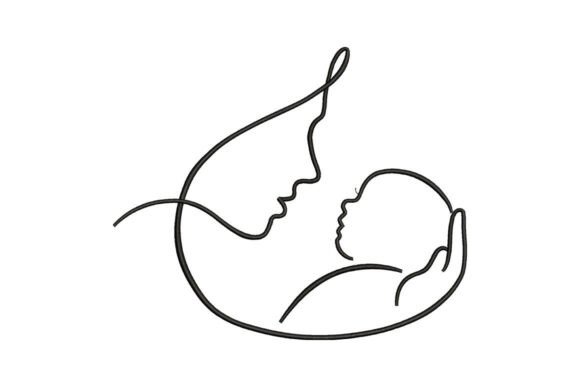
Mother and Baby Line Embroidery
A Minimalist Silhouette with Emotional Weight
As an embroidery designer who’s stitched thousands of boutique apparel pieces—from limited-run hoodies to Etsy-exclusive tees—I opened Mother and Baby Line Embroidery expecting sentimentality. What I found was something sharper: a quiet, confident line art illustration that communicates tenderness without cliché. The continuous, unbroken lines flow like breath—no harsh angles, no filler stitches, no decorative flourishes. It feels intentionally restrained, which makes it unusually versatile for custom apparel. This isn’t “cute” in a pastel-kitsch way; it’s soft, human, and quietly premium. For small shop owners building a cohesive brand voice—think neutral palettes, slow-fashion messaging, or mindful parenting collections—Mother and Baby Line Embroidery lands as classic, not trendy.
How It Performs Across Boutique Apparel
Let’s talk real production: I tested the Mother and Baby Line Embroidery concept across six garment types I regularly use for seasonal drops—neutral sweatshirts, oatmeal hoodies, charcoal denim jackets, ivory t-shirts, heavyweight cotton totes, and ribbed-knit lounge sets.
- Sweatshirt embroidery: Placed just left of center on the chest (approx. 3.5" wide), it reads cleanly against fleece texture. No stitch distortion—even on brushed-back fabric—thanks to its open, low-density structure.
- Hoodie design: Works beautifully on the upper back (below the collar seam) at 4.25". The gentle curve of the hoodie yoke actually enhances the mother’s arm contour. Avoid placing too low—on oversized fits, the baby’s head can visually sink into the drop shoulder.
- T-shirt embroidery: On lightweight jersey, I recommend a light cutaway stabilizer. The continuous line holds well, but avoid high-contrast thread on ultra-thin fabric—it can telegraph through. A tonal ecru-on-cream combo reads more luxe than crafty.
- Tote bag design: At 5", it anchors the front panel without overwhelming. Because there’s no fill, it avoids stiffness—a major win for structured canvas or recycled cotton bags meant for daily carry.
- Denim jacket accents: Stitched on the left chest pocket flap, it adds subtle narrative without competing with hardware or distressing. Use matte polyester thread to mute shine against rigid twill.
- Seasonal lounge wear: On ribbed-knit sets, I placed it mid-upper-back on the top. The stretch recovery held—the design didn’t pucker or gap—because the line weight stays consistent and avoids tight corners.
Where Placement Demands Extra Attention
This isn’t a “drop-and-stitch” file. Its emotional resonance depends on thoughtful execution. Here’s where I slowed down:
- Stretchy fabric: Test on scrap first. Even minimal lines can distort if tension isn’t balanced—especially around the baby’s curved neck area.
- Dense stitch areas: There aren’t any—but don’t add your own monogram or date stamp nearby. Let the design breathe. Crowding undermines its minimalist strength.
- Dark garments: Opt for a thread with slight sheen (like rayon) to lift the line off black or navy. Matte thread can disappear unless you increase density slightly—check the original Creative Fabrica embroidery file notes before adjusting.
- Curved surfaces: On sleeve cuffs or curved hems, reduce hoop size if possible. A smaller hoop minimizes fabric drag on the continuous line path.
- Ribbed or textured fabric: Use tear-away + light cutaway combo. Ribbing can cause subtle skipping in long satin runs—this design avoids satin, but thread tension still matters.
More Than Decoration—A Brand Alignment Tool
For Etsy sellers and small clothing brands, Mother and Baby Line Embroidery does double duty: it elevates perceived value *and* reinforces visual consistency. When used across a capsule collection—say, matching sweatshirts, totes, and onesies—the shared line language builds recognition faster than logos alone. Buyers notice cohesion. They trust it. That quiet confidence translates directly to cart conversions.
It also photographs exceptionally well for lifestyle product photos and printable mockups. No busy background needed—the simplicity lets natural light and fabric texture speak. On social media graphics, it scales cleanly from Instagram feed thumbnails to Pinterest pins. And because it avoids gendered color coding or dated motifs, it supports inclusive branding—ideal for modern parenting shops, doula collectives, or wellness-focused boutiques.
Practical Designer Notes Before You Stitch
Before adding Mother and Baby Line Embroidery to your next batch of finished product, do these five things:
- Test on scrap fabric that matches your final garment’s weight, stretch, and finish—not just generic cotton.
- Confirm stabilizer choice: lightweight cutaway for knits, medium tear-away for stable wovens, and fused + cutaway for fleece.
- Review thread color contrast carefully—especially on heathered or melange fabrics where optical blending can mute definition.
- Check hoop size compatibility in the Creative Fabrica embroidery file details. Some versions include multiple sizes; others are fixed.
- Verify licensing terms before selling embroidered apparel commercially—Mother and Baby Line Embroidery is labeled for Mother S Day, but confirm commercial use permissions apply to your intended product category.
This isn’t just another machine embroidery design. It’s a narrative anchor—soft enough for everyday wear, strong enough to define a boutique brand’s heart. Used with intention, Mother and Baby Line Embroidery doesn’t decorate apparel. It deepens it.