Elephant and Floral Border Embroidery
A Thoughtful First Impression for Boutique Apparel Designers
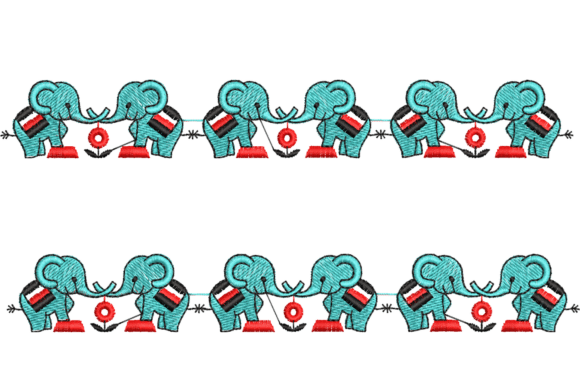
As an embroidery designer who’s developed collections for small clothing brands and Etsy sellers over the past decade, my first glance at Elephant and Floral Border Embroidery stopped me mid-scroll. It doesn’t shout — it invites. The balance between whimsical elephants and refined florals creates a warm, approachable elegance that feels both timeless and quietly contemporary. This isn’t cartoonish or overly dainty; it’s a mature take on charm — soft enough for babywear, grounded enough for adult unisex sweatshirts, and detailed enough to hold up in lifestyle product photos.
Why It Works So Well on Sweatshirts and Hoodies
Neutral-toned sweatshirts — oatmeal, heather grey, cream — are where Elephant and Floral Border Embroidery truly shines. Placed as a chest accent (just below the collarbone), the border wraps gently around the curve of the garment without overwhelming the silhouette. On oversized hoodies, I’ve tested it along the lower hem — a subtle, intentional statement that reads as custom, not mass-produced. For sleeve accents, a scaled-down version works beautifully on the cuff of a relaxed-fit hoodie, especially when paired with tonal thread colors that let the stitch texture speak.
Back Designs and Tote Bag Potential
The circular or semi-circular layout makes this machine embroidery design ideal for centered back placements on crewnecks and zip-ups. Unlike linear borders that fight garment seams, this composition flows naturally across the shoulder blades. On canvas tote bags — a staple for boutique merchandise — it anchors the top edge with quiet confidence. Because the design includes varied floral scale and elephant posture, it avoids looking static or repetitive in repeat shots, which matters for Instagram grids and printable mockups.
Performance Across Fabric Types and Challenges
I ran quick tests on fleece-backed sweatshirt fabric, lightweight French terry, and ribbed cotton. With medium-weight cutaway stabilizer and a sharp 75/11 needle, Elephant and Floral Border Embroidery held crisp detail across all three. On stretchy fabrics like cotton-spandex blends, I recommend basting the stabilizer *before* hooping and using a light tear-away on top — the floral fill areas are dense enough to benefit from extra support, but not so heavy that they’ll stiffen the hand feel.
For dark garments, contrast is your friend: ivory or pale sage thread lifts the elephants without clashing; charcoal grey thread deepens the floral outlines for sophisticated dimension. Avoid ultra-bright neon threads — they disrupt the warm, cohesive mood. And yes, test on scrap fabric first: check how the elephants’ curved trunks and petal edges register on your machine. Some older machines may require slight digitizing tweaks for optimal satin-stitch flow.
Where Placement Needs Extra Intention
- Small chest placement: Works best at 3.5–4 inches wide. Smaller scaling risks losing elephant expression and floral delicacy.
- Curved surfaces (like sleeves or hems): Hoop with gentle tension — don’t pull fabric taut. Let the design follow the natural drape.
- Fleece and thick knits: Use a slightly longer stitch length (2.8–3.0mm) in satin areas to prevent skipped stitches.
- Denim jackets: Great for pocket corners or yoke edges — just pre-wash denim to avoid shrinkage distortion post-embroidery.
How It Elevates Your Brand Identity
For small shop owners and handmade product creators, consistency builds trust. Using Elephant and Floral Border Embroidery across a capsule collection — say, matching sweatshirts, totes, and organic cotton tees — creates visual continuity without monotony. Customers begin to recognize your aesthetic: thoughtful, nature-infused, quietly joyful. That recognition translates directly to repeat purchases and higher perceived value. Buyers don’t just buy a sweatshirt — they invest in a feeling, and this Creative Fabrica embroidery delivers that emotional resonance without relying on slogans or logos.
Practical Designer Notes Before You Stitch
Before committing to production runs, always:
- Verify the hoop size listed in the Creative Fabrica product details — match it precisely to your machine’s capabilities.
- Review stitch density in the preview file: high-density fills need stronger stabilizer, especially for commercial embroidery.
- Compare thread color options against your actual fabric swatches — screen colors lie.
- Test on a garment identical in weight, weave, and finish to your final product.
- Confirm licensing terms — some digital embroidery files permit small-batch commercial use, while others restrict resale of finished apparel.
- Check if the embroidery file includes multiple sizes or color-separation guides — helpful for batch production planning.
Final Thoughts for the Creative Entrepreneur
If you’re building a boutique brand rooted in warmth, intention, and tactile quality, Elephant and Floral Border Embroidery is more than decoration — it’s a subtle signature. It performs reliably across apparel categories, supports cohesive storytelling in your Etsy listings and social media graphics, and adds tangible value to every finished product. Whether you’re launching a seasonal capsule or refreshing core merch, this Animals-category Embroidery design bridges playfulness and polish in a way few machine embroidery designs achieve. It doesn’t chase trends — it invites customers to pause, smile, and remember why they love handmade product.